 |
中国铁路
|
Zhōngguó Tiělù
|
|
These pictures are from May 2005 and February 2008 on various trips
between Suzhou, Shanghai and Hangzhou. As I had little to no time to take pictures, please
excuse me for the quality of the pictures. |
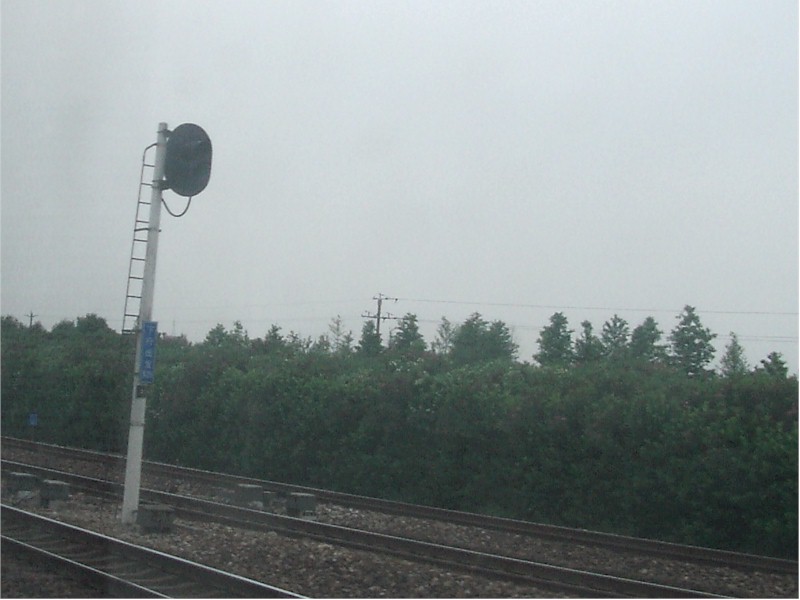 |
Distant signal.
See also Chinese colour light signals and Chinese semaphore signals |
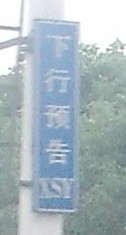 |
Post plate for the above signal. The characters say 下行预告 (xià xíng yù gaò), literally
"down movement advance notice", so this post plate identifies it as a distant
signal for the down direction.
Note that in China, the different directions of a line are identified as
"up" and "down", respectively. That is a legacy from the British who built
the first railways in China. |
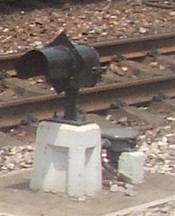 |
This may be an exit signal announcer, but I am not sure. |
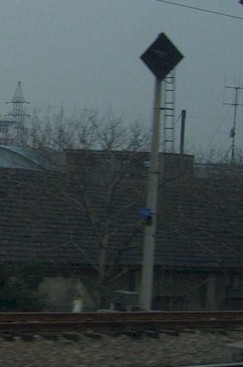 |
Entry signal announcer |
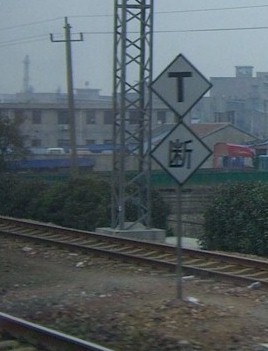 |
Switch-Off announcing signal on fast line: Expect a switch-off signal
|
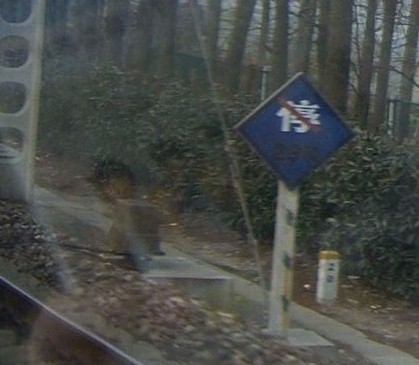 |
Don't stop on next 29m.
I saw this board usually mounted before
catenary tensioners. The character 停 (Tíng) means "Stop"
|
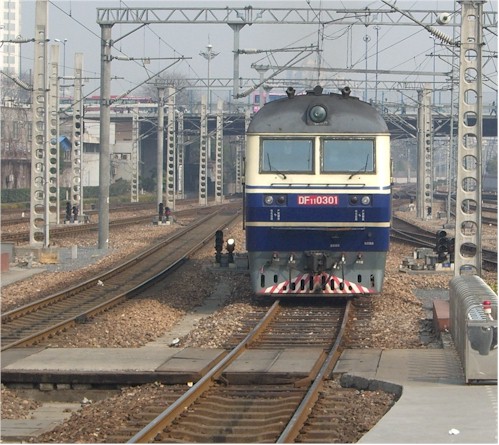 |
A loco is passing a shunting signal at clear (Chinese
railways use left-hand running, so the signals are mounted
to the left of the track) |
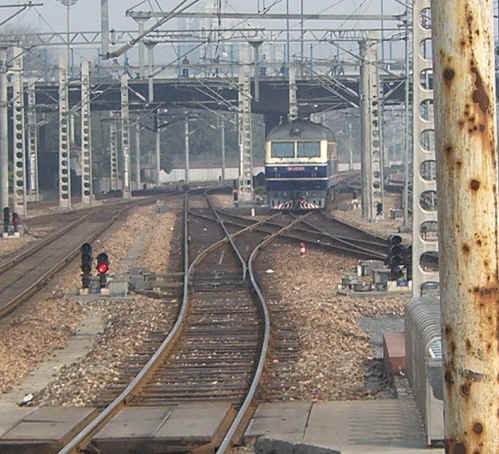 |
After the loco has passed, the signal changes to stop. |
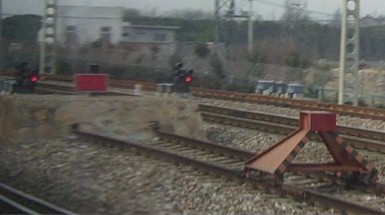 |
The red board behind the buffer is a line blocked signal and looks very
similar to it German counterpart, the Sh 2 board. |
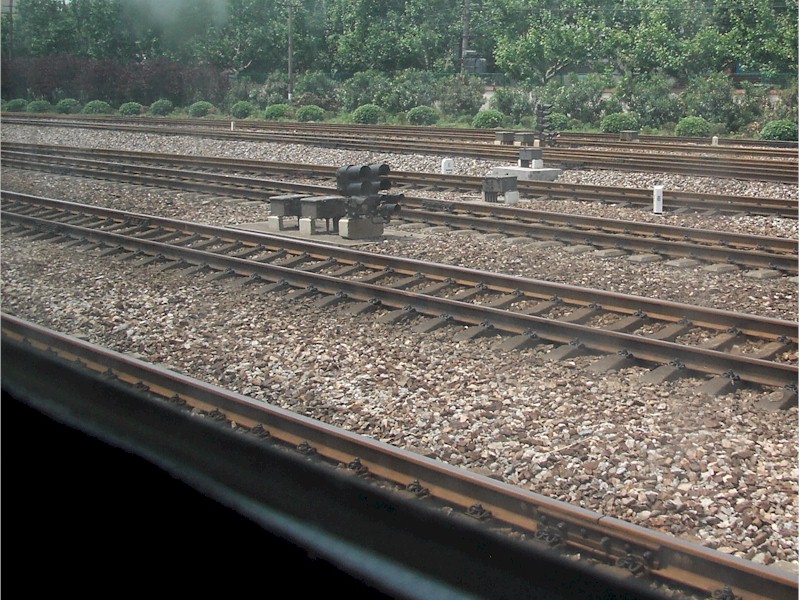 |
Shunting signals |
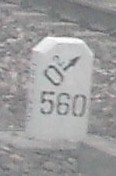 |
Gradient marker |
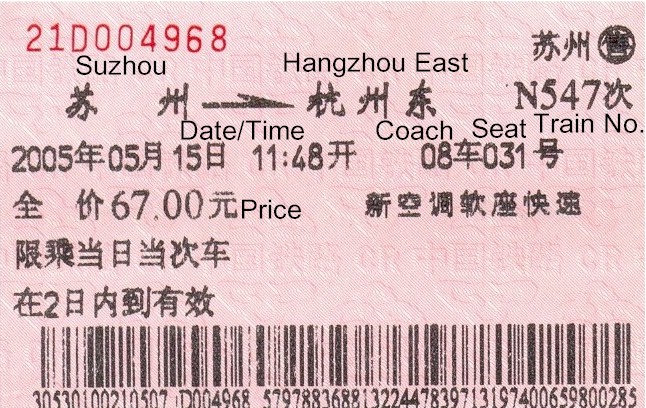 |
Old train ticket. Click image for details and explanation |
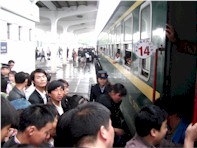 |
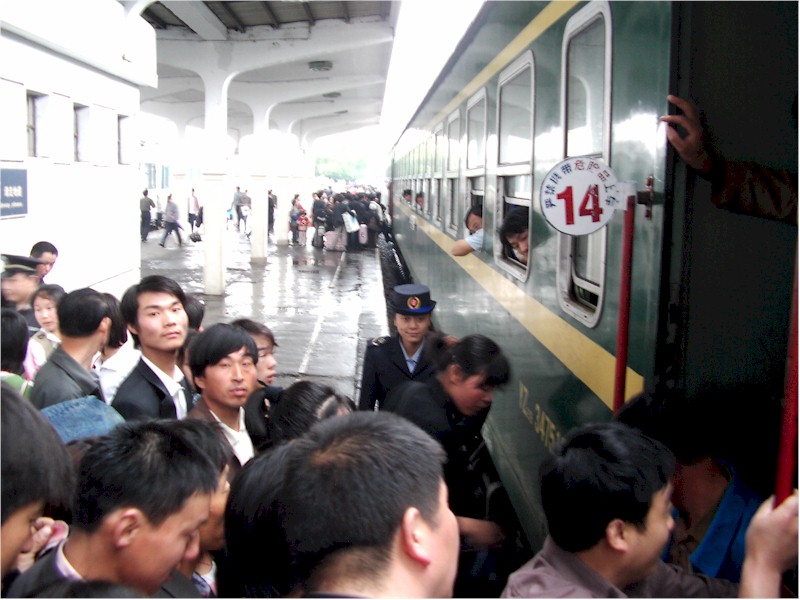
Boarding a hard seater to Shanghai in the station of Suzhou |
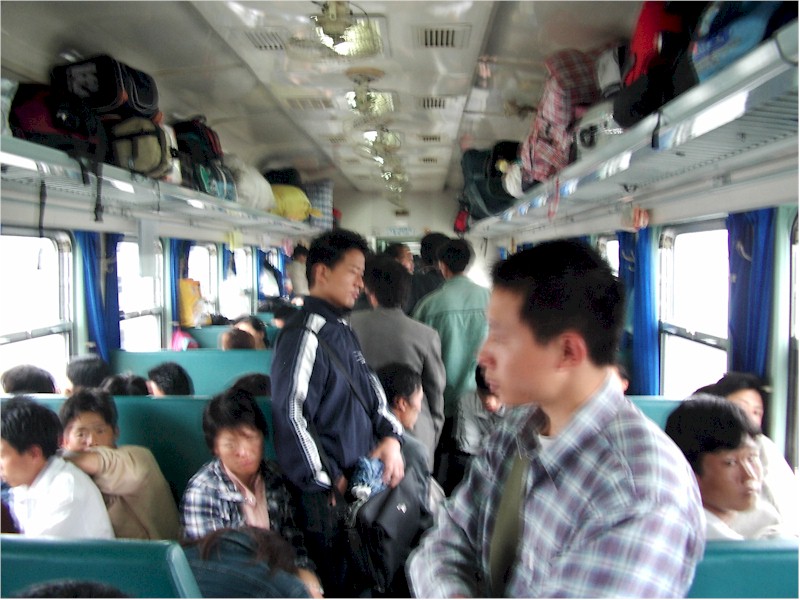 |
Hard seater. Chinese trains come in four classes: Hard seater, soft
seater, hard sleeper, soft sleeper.
Despite the name of the hard seater, there
is a definite chance of not getting a seat...
|
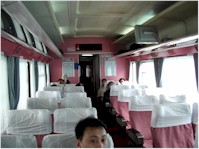 |
Soft seater. With a ticket there is a seat reservation, so you have a
chance of getting a seat... |
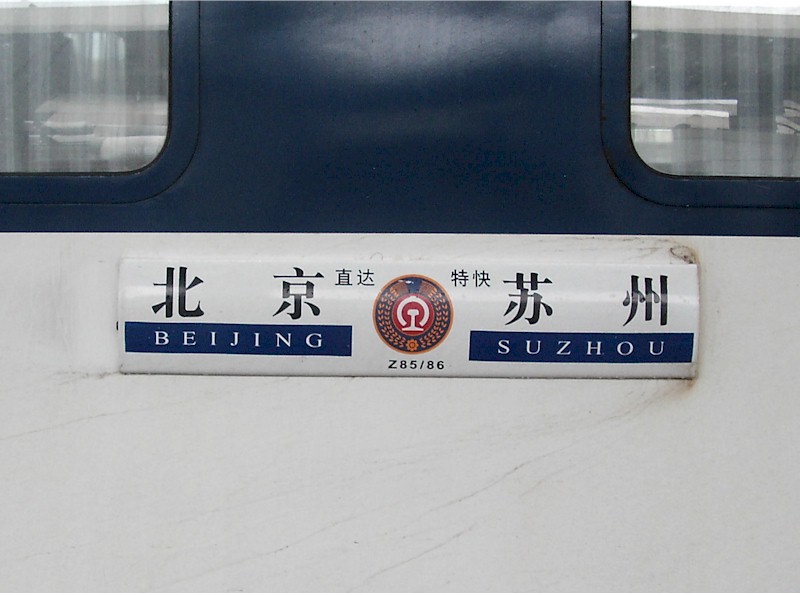 |
Train destination boards |
 home
home foreign signals index
 email
email Malaysia